





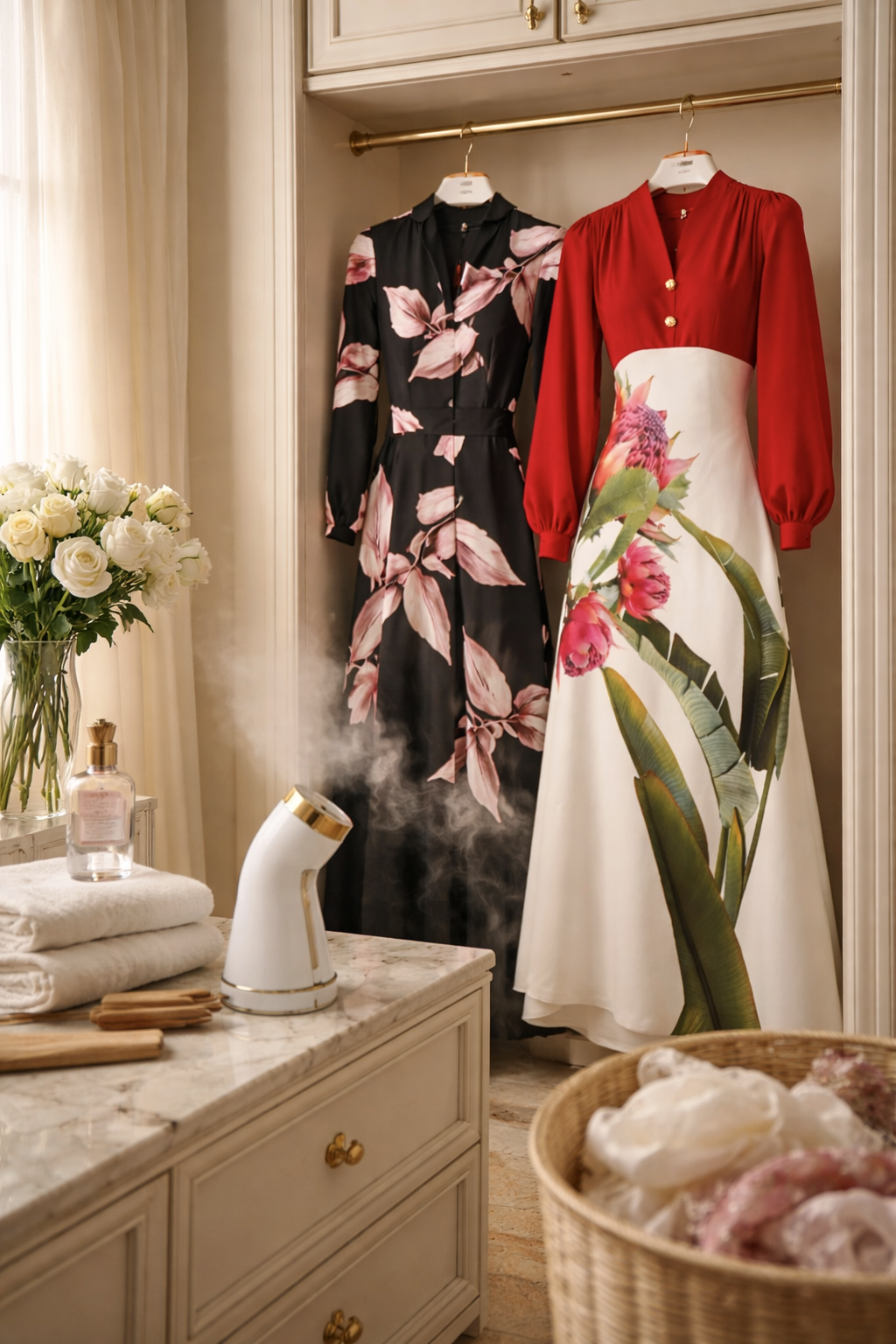
Nos conseils et astuces pour que vos vêtements durent dans le temps
Tutos et tips
Stop aux bouloches
Le froid resserre les fibres de vos vêtements en laine qui boulochent, placez-les dans des sacs en plastique pendant 48 heures au congélateur.
Si certaines résistent, prenez les bigoudis de votre grand-mère et roulez-les. Vous pouvez aussi utiliser un peigne à mailles anti-bouloches.
Les mauvaises odeurs dans les chaussures
Pour des chaussures sans odeurs, laissez agir quelques heures du bicarbonate de soude sur vos semelles ou saupoudrez de talc. Aérez-les une fois rentré chez vous, portez des chaussettes avec vos paires de baskets et investissez dans l'achat de semelles.
Experte en repassage
Repassez sur l'envers dès que possible afin de ne pas brûler vos vêtements et ni de faire de plis. Commencez par définir la bonne température La chaleur est indiquée par des points sur chaque étiquette : 1 point = repassage à basse température ; 2 points = repassage à température moyenne ; 3 points = repassage à température élevée.
Décryptage des étiquettes
Les étiquettes présentes sur nos vêtements forment un véritable guide d'entretien.
Le bassin rempli d'eau fait référence au lavage et à la température conseillée.
L'icône d'un cercle avec la lettre P,F ou W est un repère pour les professionnels des textiles.
Le cercle dans un carré est le symbole du sèche-linge. Il énonce si l'on fait sécher ou non (logo barré d'une croix) son vêtement en machine.
STOP AUX TACHES
Stop aux taches...de café ou de thé
Mouillez immédiatement avec de l'eau froide. Ensuite, tamponnez doucement avec un chiffon imbibé de vinaigre blanc. Sur un tissu blanc, utilisez de l'eau oxygénée à 10-12 volumes.
Stop aux taches...d'herbe
Le plus efficace est de frotter légèrement avec un chiffon imbibé d'alcool à brûler, puis de procéder au lavage. Si la tache persiste sur du
Stop aux taches...de sang
Lavez la partie tachée à l'eau froide pendant quelques minutes puis rincez. Si la tache persiste, imbibez avec de l'eau de javel ou de l'eau oxygéné sur tous textiles blanc ou faites fondre un cachet d'aspirine dans un verre d'eau et trempez le tissu dedans pendant quelques minutes pour les tissus de couleurs.
Stop aux taches...de stylo
Sur du tissu en laine ou du coton, munissez-vous d'alcool à 90° et tamponnez la tache. Sur du polyester, misez sur du dissolvant, et sur du cuir velours ou du daim optez pour une gomme à encre. Passez votre vêtement détaché à la machine à laver. Si la tache ne part toujours pas, mélangez du vinaigre blanc à de l'eau froide puis frottez à l'aide d'une brosse.
Stop aux taches...de fruits et légumes
Les taches de fruits et de légumes s'oxydent à l'air et à la chaleur. Il est donc conseillé de laver le linge taché très rapidement. Pour cela, tamponnez la tache avec un chiffon imprégné de vinaigre blanc ou de l'eau oxygénée dans 10-12 volumes d'eau.
Stop aux taches...de vin
Pour les taches récentes, saupoudrez votre vêtement taché de talc ou de farine. Après une heure d'absorption, frottez la tache puis passez votre tissu à la machine. Pour les taches incrustées et anciennes, mélangez du jus de citron avec du bicarbonate de soude, appliquez ce mélange sur la tache et laissez poser une heure ou plus.
Stop aux taches...de transpiration
Débarrassez-vous facilement des taches jaunes de transpiration en tapotant sur celles-ci avec de l'eau oxygénée. Sur les autres tissus, laissez tremper une demi-journée dans de l'eau froide additionnée de vinaigre blanc.
Entretien par matières
L'entretien...du coton
en évitant de les laver à des températures au-dessus de 40 degrés. Un lavage fréquent augmente le risque d'abimer le tissu. Nous préconisons de façon générale un lavage délicat à 30 degrés et si possible sur l'envers.
L'entretien...du cuir
Évitez tout contact avec la pluie, les chaudes températures, les produits chimiques et les espaces rugueux pour ne pas ternir vos vêtements et accessoires en cuir. Pour qu'un cuir dure longtemps, on l'imperméabilise avec un produit adapté au type de cuir. Nous préconisons l'entretien du cuir par un spécialiste.
L'entretien...du jean
Le jean se lave à l'envers afin qu'il garde sa couleur, et à basse température soit 30 degrés. Sa particularité est qu'il déteint sur les premiers lavages, alors ne faites pas l'erreur d'y mettre du blanc ! Un séchage à l'air libre est exigé.
L'entretien...du laine
Pour une plus longue durée dans le temps de vos mailles, lavez vos hauts avec une lessive douce pour laine spécifique. Un lavage à la main ou à froid en machine sur un programme laine, avec au maximum de 800 tours pour éviter le lustrage est fortement conseillé. Le repassage est à proscrire pour ne pas lustrer la laine
L'entretien...du lin
Nous préconisons un lavage délicat en machine à 30 degrés. Pour un premier lavage, lavez votre vêtement seul ou avec d'autres vêtements de couleurs similaires sur l'envers. L'usage des lingettes anti-décoloration est très efficace. Aussi, favorisez le séchage naturel à l'air libre. Si vous souhaitez lui redonner sa forme d'origine, il faut impérativement le repasser.
L'entretien...du mohair
Prenez soin de cette fibre naturelle avec un entretien lavage main ou à froid en machine sur un programme laine. Utilisez une lessive douce et mettez votre mohair sur l'envers dans un filet à linge pour le protéger du tambour de la machine. Faites-le sécher à l'abri de la chaleur pour préserver sa couleur et à plat pour sauvegarder sa forme. Ici, le repassage est à proscrire pour ne pas lustrer le mohair. Ou sinon avec un jet de vapeur pour défroisser la pièce.
L'entretien...du synthétique
Ce chanceux ne se froisse pas ni se décolore. Vous pouvez lire attentivement l'étiquette d'entretien et procéder à la température de lavage indiquée. Néanmoins, un lavage délicat à 30 degrés suffit à enlever les taches résistantes.
L'entretien...du cachemire
Pour garder la douceur et la souplesse de votre cachemire, évitez les lavages quotidien. Un lavage avec une lessive douce et à froid, sur un programme laine est fortement conseillé. Pour celles qui souhaitent le laver à la main, il vous suffit de le tremper et le tapoter délicatement, puis de le rincer à l'eau claire. Faites sécher votre cachemire à l'abri de la chaleur et à plat. Le repassage est à proscrire, vous pouvez le défroisser au jet de vapeur
Protégeons les océans
Protégez les vêtements synthétiques avec un sac de lavage. Celui-ci réduit aussi la quantité de microfibres qui peuvent se retrouver dans les rivières et les océans suite aux lessives. Après avoir lavé vos vêtements dans le sac, retirez les microfibres et jetez les avec vos autres déchets plastiques.